
_20260415_jT0kczpo.jpg)
Even well-designed furniture continues to evolve over time. As manufacturers refine materials, joinery techniques, and structural details, small improvements can make products more durable and reliable in everyday use.
For a wood bed frame, these kinds of refinements can make a noticeable difference. A bed supports weight every night, absorbs movement during sleep, and responds to subtle environmental shifts such as changes in humidity. Over time, even small structural adjustments can improve durability, stability, and overall ease of use.
With that in mind, we recently revisited several parts of our bed frame and headboard. Instead of introducing major changes, we focused on refining a few key structural areas so the frame performs more consistently in everyday use.Here’s a closer look at what changed and why.
Why Structure Matters in a Bed Frame
A bed frame may seem simple, but its structural role is essential: it distributes weight across multiple support points while remaining stable through years of nightly movement.
Many modern bed frames draw inspiration from traditional Japanese woodworking joinery, where precisely shaped wooden parts interlock to create strong connections. Instead of relying heavily on visible hardware, the joints distribute structural stress through their interlocking geometry.
This approach helps the structure remain stable while preserving a clean, minimalist look. The refinements introduced in our latest production runs follow the same principle—improving how materials, joinery, and support components work together.
Frame Structure Refinements
Reinforcing the Central Support System
A strong support system is essential in any wood bed frame. In our design, a single cross-beam runs vertically from head to foot, with a horizontal beam connecting the sides. Together, they help distribute mattress weight evenly across the frame and prevent pressure from concentrating in any one area.

Cross support beam structure inside a wood bed frame
To improve the load-bearing strength of this setup, we changed the material of both beams from rubberwood to poplar. Poplar is widely used in structural furniture components because it offers a useful balance of flexibility and strength.
In everyday use, this change helps the beam better handle stress caused by movement, shifting weight, and long-term wear.
Strengthening the Joinery System
The frame’s structure is built around a joinery-inspired system rooted in traditional Japanese woodworking—where components interlock to form a stable foundation.
To reinforce these connections, we introduced several improvements:
The internal dowel inside the joint was replaced with a metal reinforcement pin, improving resistance to repeated structural stress. We also added protective wooden blocks to specific groove areas during packaging, helping the joints resist external pressure during shipping and maintain their original alignment.
We also extended the T-shaped structural joint that connects main components from 10 mm to 17 mm. Increasing the contact area helps distribute structural loads more evenly across the joint.
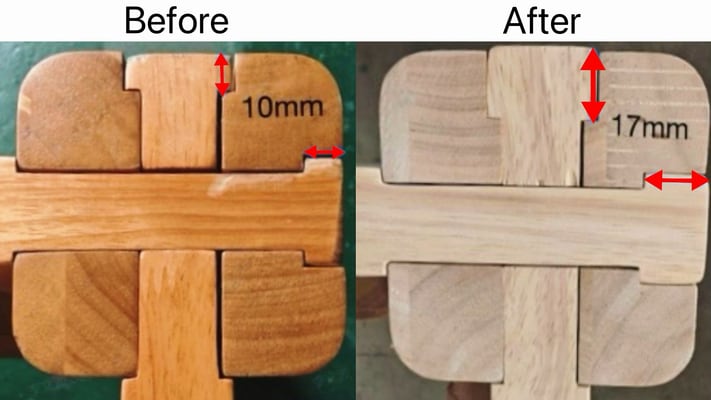
Bed frame joinery thickness before and after structural reinforcement
Together, these upgrades help the joinery stay stable and secure through years of everyday use.
Additional Locking Pins for Long-Term Stability
Traditional Japanese wood joinery relies mainly on precision fitting between wooden components. In modern furniture design, small reinforcements can go a long way in helping everything stay aligned over the years.
To further stabilize the structure, we added eight locking pins across the four primary joinery connections.
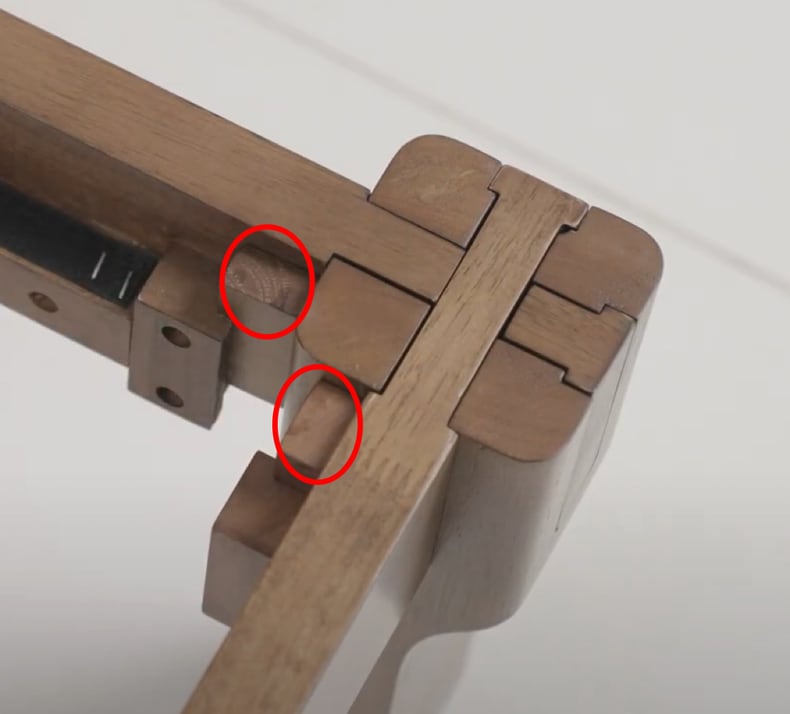
Locking pin detail used to secure wood bed frame joints
_20260319_jnT3eDzg.jpg "img_v3_02vu_48a4d99c-9b93-41d5-9df8-8d92456ab74g (1).jpg")
Wood bed frame structure diagram showing locking pin connections
These pins sit inside the joints and help keep everything aligned. By reducing the chance of gradual loosening, they help the frame maintain long-term structural integrity.
Upgraded Slats for Better Mattress Support
The mattress support system also saw two improvements:
First, we added a durable engineered veneer layer to the slats, improving surface durability and resistance to everyday wear. Tenon ends were also added so the slats sit more securely in the support grooves.
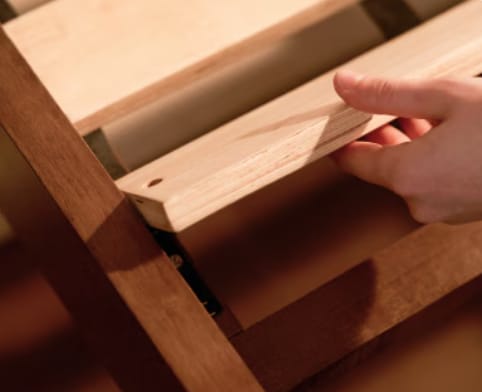
Engineered veneer surface used on wood bed frame slats
 (1)_20260319_qmbP4Eyb.jpg "img_v3_02vu_669fb2a1-39fe-4847-8efc-a83aa990c7fg (2) (1).jpg")
Wood bed frame structure diagram showing tenon joinery connections
In addition, we increased slat thickness from 12 mm to 15 mm, boosting rigidity and helping distribute body weight more evenly across the frame.
Together, these changes help the mattress perform as intended while maintaining consistent support across the bed.You'll notice the slats feel sturdier under the mattress—no flex or give when pressure is applied.
Headboard Refinements
A More Durable Headboard Structure
The connection between the bed frame and headboard was another area we targeted for improvement.
The internal material around the mounting points went through several iterations before we settled on solid rubberwood. Solid wood offers higher density and better durability than engineered panels, making it the better choice for structural components like this one.
This update gives the headboard a more solid feel after installation and brings its construction in line with the rest of the frame.
Tool-Free Headboard Installation
Ease of assembly is another key part of everyday usability.
The updated headboard now features a tool-free installation design, so it connects to the frame without any extra tools. This simplifies setup and cuts down on installation time—especially helpful for customers assembling the bed themselves. Small touches like this can make the process noticeably smoother, without compromising structural reliability.
_20260319_Jh1Zm9aw.jpg "image (3).jpg")
Bed frame assembly with tools before tool-free installation design
_20260319_cEnOI4td.jpg "image (4).jpg")
Tool-free wood bed frame assembly after design update
Continuous Refinement in Furniture Design
Furniture design evolves through thoughtful iteration. Material choices, joinery details, and assembly methods all shape how a product performs in real homes.
For a Japanese joinery bed frame, these structural elements matter even more. Well-crafted joints and carefully selected materials work together to maintain stability while supporting nightly movement and weight.
By revisiting these details and refining them over time, we continue working toward a better balance of durability, stability, and everyday usability in every frame we make.
Frequently Asked Questions
1. What are the benefits of Japanese joinery in modern bed frames?
Japanese joinery relies on interlocking wood parts that distribute structural stress across larger surfaces. Unlike frames that depend solely on screws, this method reduces the risk of joints loosening over time, resulting in a squeak-free bed frame that maintains its integrity through years of movement.
2. Why is poplar wood used for the central support beam?
Poplar is favored for structural components because of its excellent strength-to-weight ratio and resistance to warping. By upgrading the center support beam to poplar, the frame can handle heavier loads (often 600–800 lbs+) while providing a more rigid foundation for the mattress.
3. How do 15mm slats affect mattress longevity?
Thicker slats (15 mm / 0.6") provide a more rigid surface that prevents the mattress from sagging between gaps. This ensures even weight distribution, which is essential for maintaining the structural integrity of both memory foam and hybrid mattresses, ultimately extending their lifespan.
4. Can a tool-free headboard really stay stable?
Yes, provided the mounting points are engineered correctly. By using solid rubberwood for the mounting area and precision locking mechanisms, a tool-free design can achieve the same level of stability as traditional bolts while making the initial assembly significantly faster and less prone to error.
5. What should I look for to ensure a bed frame won't creak?
Creaking is usually caused by wood-on-wood friction or loose metal fasteners. Look for frames with reinforced joinery (like the upgraded 17 mm contact joints) and metal locking pins. These features minimize micro-movements, ensuring the frame stays silent even as the wood naturally expands and contracts with humidity.
6. What is the significance of the 17 mm joint contact area?
The increase from 10 mm to 17 mm represents a nearly 70% increase in the contact surface at critical weight-bearing joints. This refinement drastically reduces the pressure on any single point of the wood, preventing the "crushing" of wood fibers over time and ensuring the frame remains rock-solid.
Learn More About Wood Bed Frames
If you’d like to dig deeper into why many homeowners choose solid wood furniture, you may also enjoy this guide:
This article explores the practical advantages of wood bed frames—from durability and everyday comfort to maintenance and long-term value—along with the design qualities that make them a popular choice for modern bedrooms.