
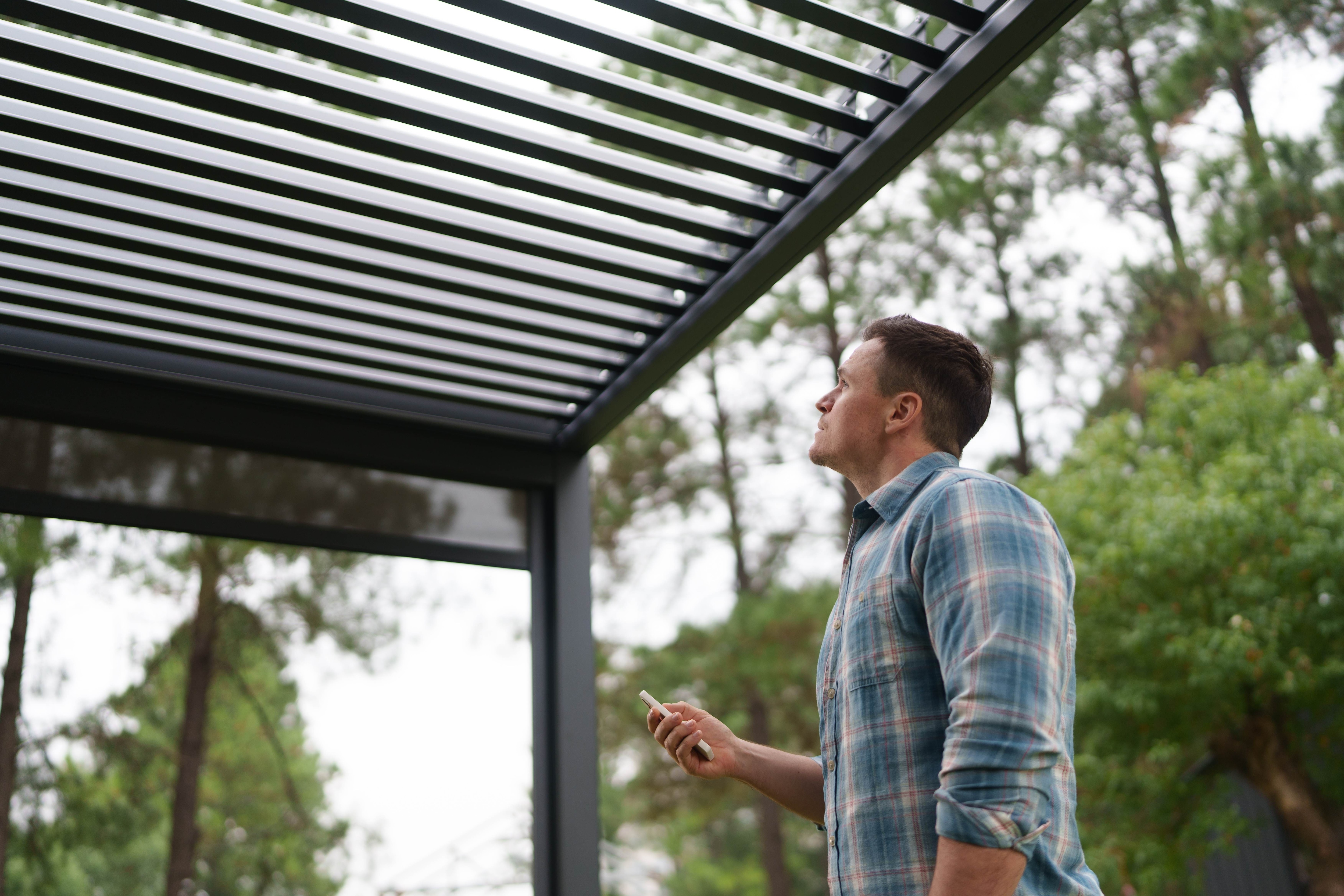
Pergolas have come a long way from simple open-frame structures. Today, a pergola with a roof can provide shade, weather protection, and year-round comfort—all while enhancing your backyard’s style. Whether you're building new or upgrading an existing pergola, this guide covers everything you need to know about choosing the right pergola roof for your outdoor living space.
What Is a Pergola with a Roof?
A pergola with a roof might sound like a contradiction at first—after all, aren’t pergolas supposed to be open-topped? Traditionally, yes. Classic pergolas are open-air structures made of vertical posts supporting cross beams and an open lattice roof, designed to provide partial shade while keeping an airy, outdoor feel.
But outdoor living has evolved. Today, many modern pergolas feature a pergola roof—one that can open, close, or adjust—bringing more flexibility to the space. Thanks to advancements in materials like extruded aluminum and motorized louvers, a pergola can now offer full rain protection when needed, while still functioning as a traditional open structure when the louvers are tilted or retracted.
Here’s how a pergola with a roof compares to the traditional version:
- Traditional pergolas offer filtered sunlight and a classic architectural touch, but limited protection from the elements.
- Pergolas with roofs, especially those with adjustable louvers, offer the best of both worlds—sun when you want it, shade or rain protection when you need it.
This shift in design explains why more homeowners are choosing pergolas with roofs. Whether it’s to create a year-round patio lounge, protect outdoor furniture from weather, or add a sleek, modern focal point to the backyard, a covered pergola gives you more use out of your space without sacrificing style.
Why Adding a Roof to Your Pergola Matters?
A pergola with a roof offers more than just a stylish upgrade—it turns your outdoor structure into a true all-season living space. While traditional pergolas are known for their open slatted tops, adding a roof brings a host of practical benefits that make your backyard more comfortable, functional, and beautiful. Here’s why more homeowners are choosing to install a roof for their pergola:
1. Protection from the Elements
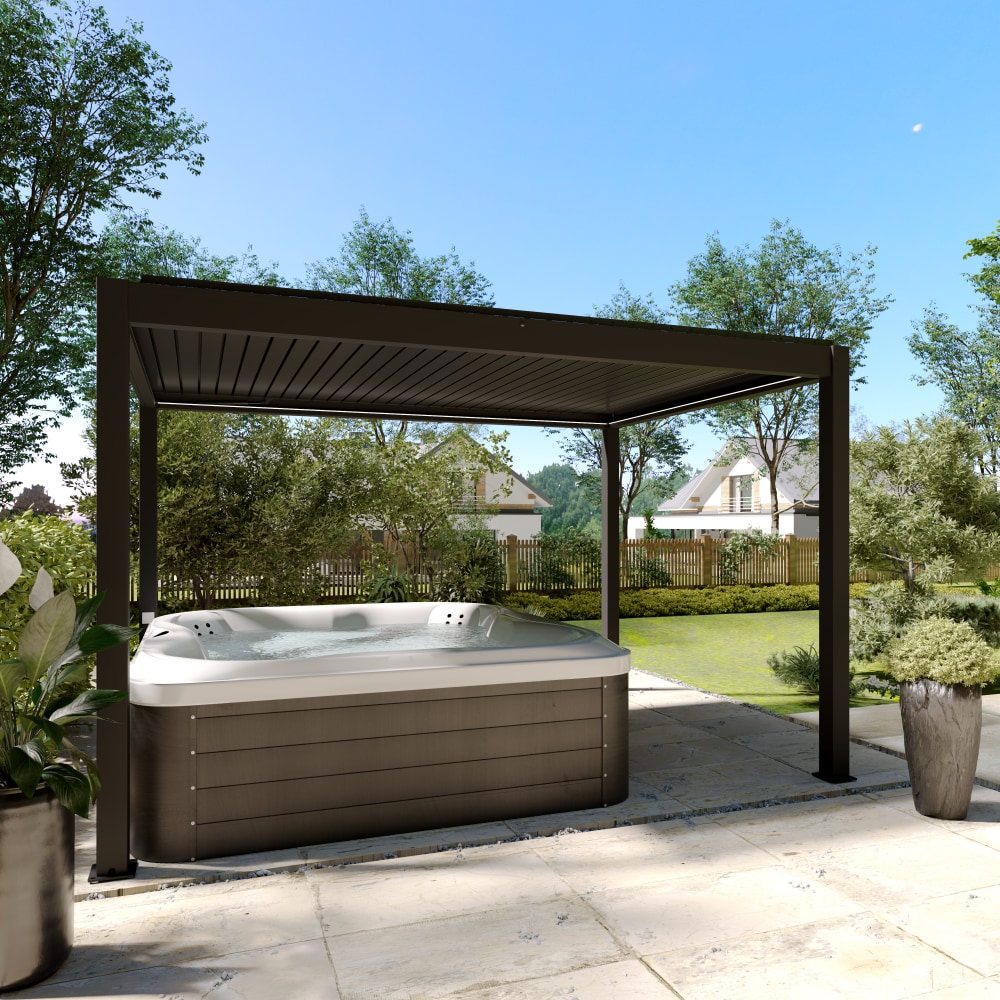
A pergola roof shields you from sun, rain, and even light snow, giving you the freedom to enjoy your outdoor space no matter the weather. Whether you’re hosting a dinner, soaking in a hot tub, or simply relaxing with a book, you won’t have to run indoors when the skies turn gray.
2. Increased Comfort & Usability
By adding shade and blocking direct sunlight, a roofed pergola creates a cooler, more pleasant environment. This makes your patio ideal for summer lounging, family meals, or afternoon naps. With the right roofing material—such as insulated louvers or tinted polycarbonate—you can control heat, light, and airflow to suit the season.
3. Furniture & Surface Protection
Outdoor furniture, rugs, and decking take a beating from UV rays and rainfall. A roof helps reduce fading, warping, and weather-related wear, extending the life of your furnishings and finishes. This means fewer replacements and maintenance headaches.
4. Enhanced Privacy
A pergola roof adds another layer of privacy—especially when paired with screens, drapes, or side panels. It’s a smart solution if you live in a neighborhood where fences or landscaping alone aren’t enough to create a secluded retreat.
5. Visual Appeal & Design Impact
A roof gives your pergola a more substantial, “finished” look. Whether you go for a sleek modern style or something more rustic, the added structure helps define the space and creates a cozy, room-like atmosphere. It also adds height, depth, and architectural interest to your backyard.
6. Higher Property Value
As outdoor living becomes more popular, a well-designed pergola with a roof can be a strong selling point. It enhances curb appeal, increases functionality, and signals that your home is thoughtfully designed for comfort and entertaining.
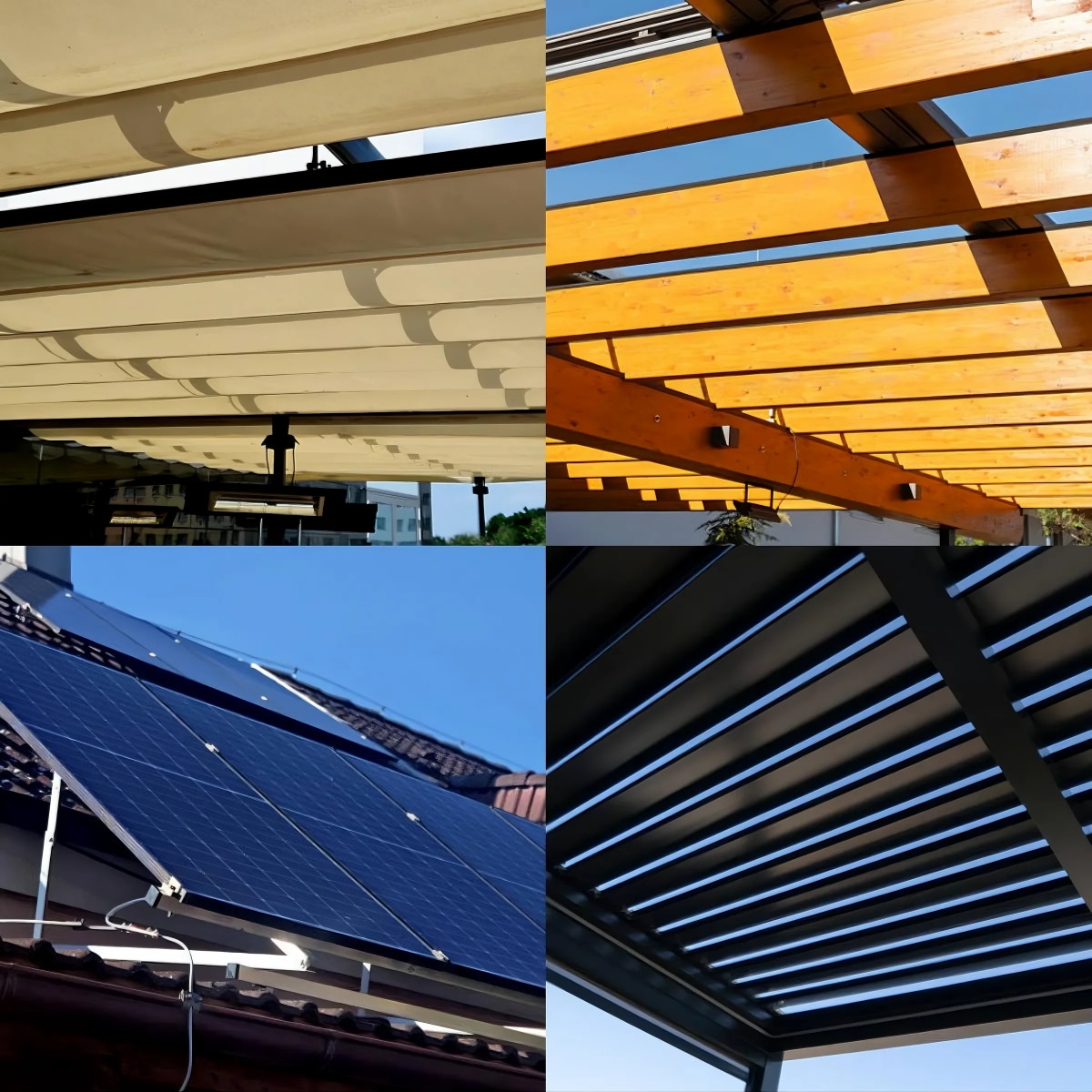
Types of Pergola Roofing Systems and Materials
The right pergola roof isn’t just about looks—it also affects comfort, durability, and how you use your space year-round. In this section, we’ll break down the most common roofing systems and materials for pergolas, along with their pros, cons, and ideal uses—so you can find the best fit for your outdoor setup.
Types of Pergola Roofing Systems
When designing your ideal outdoor space, choosing the right pergola roofing system can make all the difference. The type of roof you select impacts not just the appearance, but also how (and when) you can use your pergola. From fixed options to high-tech adjustable systems, here are some common roofs for pergolas and their key features.
1. Fixed Roofing Systems
Fixed pergola roofs are permanent structures that do not open or retract. They provide consistent shelter and are ideal for those who want year-round protection without moving parts.
- Slatted or Louvered (Fixed): These have angled slats that stay in place. They offer partial sun and airflow, making them suitable for mild climates or shaded seating areas.
- Solid Panels (Metal, Wood, Polycarbonate): Great for full protection from rain and sun. Metal and polycarbonate are low-maintenance and durable; wood offers a natural look but needs regular upkeep.
- Glass Roofs: Create a sleek, high-end look with full light transmission. However, they may require more maintenance and aren’t ideal for hot, direct-sun locations.
- Insulated Sandwich Panels: These fixed panels provide superior thermal control, keeping the space cooler in summer and warmer in winter. Ideal for year-round outdoor use.
Best for: Permanent shade structures, outdoor kitchens, high-use patio spaces.
2. Retractable Roofing Systems
If flexibility is your priority, retractable roofs for pergolas give you control over light, shade, and weather protection.
- Retractable Fabric Canopies: Lightweight and easy to use, these can fully open or close depending on weather. They're great for sunny days but offer limited rain protection.
- Manual Louvered Roofs: Operated by a crank or lever, these adjustable slats allow partial to full shade. A good middle-ground solution for varied climates.
- Motorized Louvered Roofs: High-end and highly functional, these aluminum louvers rotate with the touch of a button or app. They offer full sun, partial shade, or complete rain protection—making them the most versatile pergola roof option.
Best for: Dynamic outdoor spaces, entertaining areas, tech-friendly users seeking luxury and convenience.
3. Other Innovative Roofing Options
Modern outdoor living has inspired creative alternatives beyond traditional fixed or retractable roofs.
- Green Plant Roofs: Use climbing vines or greenery to form a natural, living canopy. Great for eco-conscious homeowners and garden lovers.
- Solar Panel Roofs: Turn your pergola into a power-generating station. These systems offer shade while reducing your energy bill. Perfect for homes with EVs or smart features.
Best for: Sustainability-focused users, off-grid areas, or anyone who wants their pergola to work a little harder.
| Roof Type | Adjustable | Weather Protection | Maintenance | Ideal For |
| Fixed Roof (Metal, Poly) | No | High | Low | All-weather coverage |
| Fixed Louvers | No | Medium | Very Low | Stylish shade with airflow |
| Manual Louvered Roof | Yes (by hand) | High | Moderate | Sun/rain control on a budget |
| Motorized Louvered Roof | Yes (motor) | High | Low | Tech-enhanced, all-season comfort |
| Retractable Fabric Canopy | Yes | Moderate | Moderate | Flexible shade on demand |
| Insulated Roof Panels | No | Very High | Very High | Year-round thermal comfort |
| Solar Panel Roof | No | High | Moderate | Energy savings + pergola functionality |
Types of Pergola Roofing Materials
Now that you’ve explored different pergola roofing systems, it’s time to consider another key factor: the materials. The roofing material you choose can greatly impact both the appearance and performance of your outdoor structure. From classic wood to modern polycarbonate panels, each option comes with its own set of pros and cons. To help you make an informed choice, here’s a breakdown of some of the most common materials used in roofs for pergolas today:
1. Wood
A traditional favorite, wood offers a warm, organic look that works beautifully in gardens and rustic settings. It can be stained or painted to suit your home's style.
- Pros: Natural aesthetic, customizable finish, affordable upfront.
- Cons: Needs regular sealing/staining to prevent rot and insect damage. Not ideal for humid or rainy climates.
- Best for: Classic or cottage-style homes, dry climates, decorative pergolas.
2. Metal (Aluminum or Steel)
Metal pergola roofs are among the most durable and weather-resistant options available.
- Aluminum is lightweight, rust-resistant, and low-maintenance.
- Steel is stronger and great for windy areas but may require occasional upkeep to prevent corrosion.
- Pros: Long-lasting, sleek and modern, low maintenance.
- Cons: Higher initial cost, may be noisy in rain, less “natural” appearance.
- Best for: Contemporary homes, high-wind or storm-prone areas.
3. Polycarbonate
These translucent plastic panels are popular for their balance of light and protection. They let in daylight while filtering UV rays and shielding you from rain.
- Pros: Lightweight, UV protection, impact-resistant, affordable.
- Cons: Prone to scratching, less traditional in appearance.
- Best for: Modern patios, light-loving spaces, homeowners wanting year-round use.
4. Fabric
Often used in retractable pergola roofs, outdoor fabrics come in various styles and colors and offer flexible shade.
- Pros: Affordable, easy to install, stylish options.
- Cons: Can fade, stretch, or tear over time; less durable in strong winds or rain.
- Best for: Seasonal shade, casual outdoor lounges, budget-conscious setups.
5. Glass
Glass roofing gives a pergola a luxurious, greenhouse-like look. It allows full light in and can be tinted or frosted for privacy or UV protection.
- Pros: Elegant appearance, excellent light transmission.
- Cons: Expensive, heavier to install, may need regular cleaning.
- Best for: High-end designs, sheltered patios, homeowners wanting full daylight.
6. Fiberglass & Plastic
Both options offer weather resistance with some transparency. Fiberglass is typically more eco-friendly, while plastic (like PVC) is widely available and easy to work with.
- Pros: Cost-effective, low maintenance, light-transmitting.
- Cons: Limited aesthetic appeal, lower lifespan for some plastics.
- Best for: DIY pergolas, budget builds, casual outdoor areas.
| Material | Pros | Cons | Best For |
| Wood | Natural look, customizable, classic | Needs regular maintenance, not ideal in wet areas | Rustic or traditional outdoor spaces |
| Aluminum | Lightweight, rust-proof, low maintenance | Can be noisy, less organic look | Modern homes, coastal or rainy climates |
| Steel | Extremely strong, weather-tough | Heavier, may rust if untreated | High-wind areas, structural durability |
| Polycarbonate | UV-resistant, lets in light, durable | Prone to scratches, less traditional style | Year-round patio cover, modern spaces |
| Fabric | Inexpensive, colorful, flexible shading | Less durable, weather-sensitive | Seasonal use, shaded lounges |
| Glass | High-end appearance, full light transparency | Costly, heavy, frequent cleaning | Luxury outdoor designs, garden rooms |
| Fiberglass/Plastic | Affordable, easy to install, lightweight | Not as long-lasting, limited design options | Budget projects, simple pergolas |
How to Choose the Best Pergola Roof for Your Outdoor Space?
Choosing the best pergola roof isn’t just about picking what looks good—it’s about finding the right balance of function, comfort, and style for your specific outdoor space. Here are the key factors to consider when choosing your pergola roofs:
1. Sunlight and Shade Preferences
Do you want full shade, dappled sunlight, or something in between?
- Full shade: Opt for solid roofing materials like metal, polycarbonate, or insulated panels to block harsh sunlight and stay cool underneath.
- Partial shade: Choose open-slatted wood, fabric canopies, or trellis-style designs to let in some sun while still offering relief.
- Adjustable shade: Louvered pergola roofs—especially motorized ones—give you the ability to control sunlight throughout the day with just a tilt of the slats.
2. Weather and Climate Conditions
Your local weather plays a big role in determining the right pergola roof.
- Rain or snow: Solid roofs made from metal, composite, or polycarbonate are ideal for year-round protection.
- Mild weather: Retractable fabric covers or polycarbonate sheets may be enough in areas with less extreme conditions.
- Wind-prone areas: Go for strong, wind-resistant materials like aluminum or steel, and avoid lightweight fabrics or panels.
3. Style and Aesthetics
The pergola roof should complement your home’s exterior and match your design preferences.
- Modern look: Sleek materials like aluminum, tinted polycarbonate, or glass create a contemporary vibe.
- Traditional charm: Natural wood or wood-look finishes add warmth and rustic character.
- Blended styles: Some pergola kits offer mixed materials (e.g., aluminum frame with wood finish) for a balanced look.
4. Budget and Installation Needs
- Consider both the initial cost and long-term maintenance.
- DIY-friendly options include fabric covers and some polycarbonate panels.
- More advanced roofs, like motorized louvered systems, may look complex but are often designed for DIY-friendly assembly with clear instructions.
5. Extra Features & Practical Considerations
- Privacy: Solid roofs offer better coverage from above—ideal if you have close neighbors or want extra seclusion.
- Orientation: Think about sun path, wind direction, and views when placing your pergola.
- Add-ons: Don’t forget optional upgrades like integrated lighting, ceiling fans, or side screens to boost comfort.
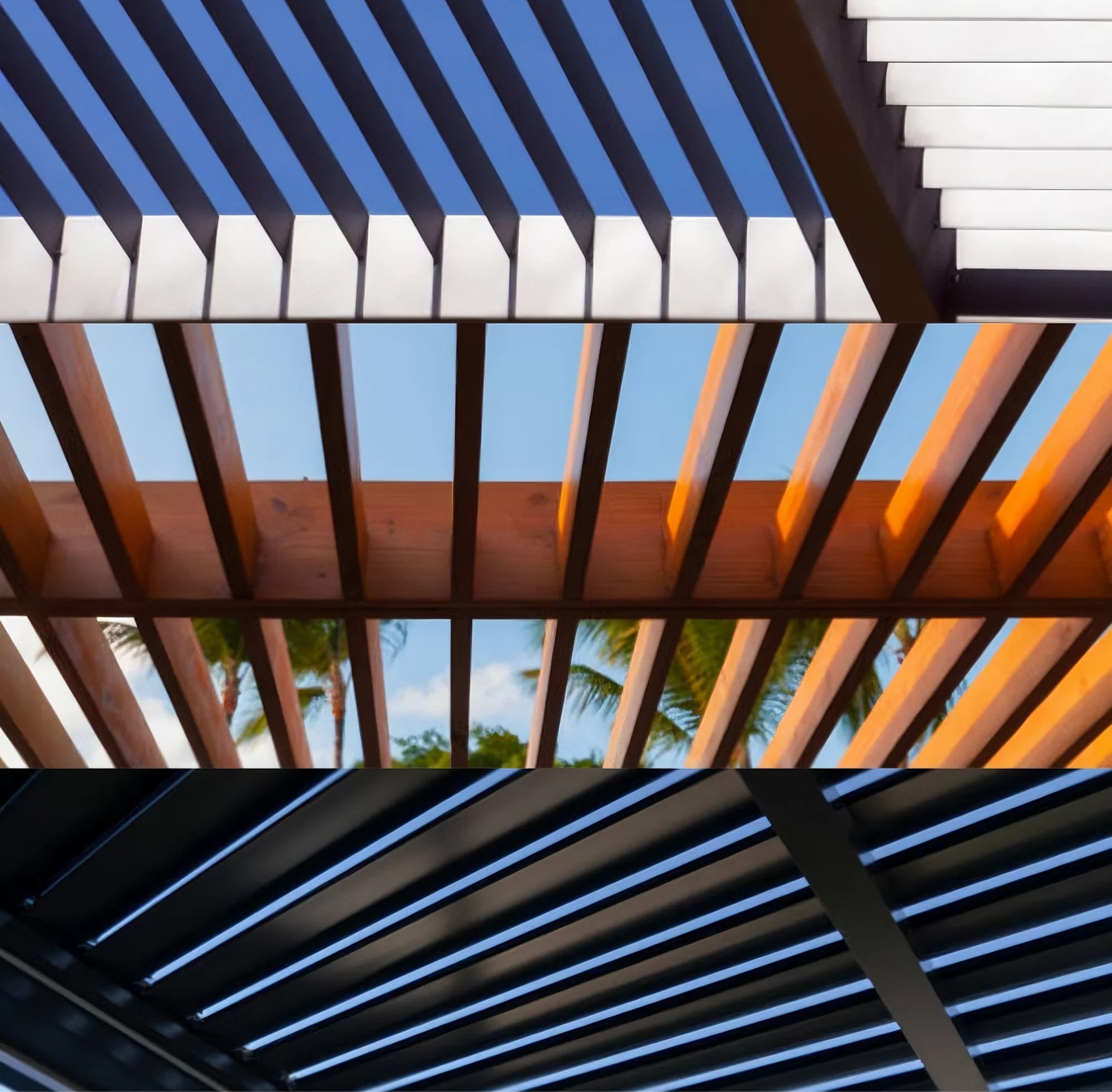
How to Build or Upgrade a Pergola Roof?
Whether you're starting from scratch or looking to upgrade an existing structure, adding a roof to your pergola can dramatically improve its functionality and style. From simple fabric shades to motorized louvered systems, modern pergola roofing has become easier to install and more DIY-friendly than ever before. Here's how to approach the process step by step.
1. Choose Between a Premade Kit or Custom Build
There are two main ways to add a roof to your pergola:
- Custom pergola kits with roofs come with pre-cut materials, pre-drilled holes, and clear instructions. These are ideal if you're handy and prefer a DIY approach. Kits typically include options like polycarbonate panels, aluminum louvers, or fabric canopies.
- Custom roof additions are ideal if you already have a pergola and want to upgrade. Depending on the material (wood slats, polycarbonate sheets, metal panels), many roofing styles can be retrofitted with basic tools.
If you're wondering, “Can you add a roof to a pergola that’s already installed?”—the answer is yes, as long as your existing structure is stable and can support the added weight.
2. Prepare the Structure
Before installing any roofing, inspect your pergola to ensure it’s properly anchored and level. The frame must be sturdy enough to support the chosen roof material, especially if you're using heavier options like wood or insulated panels. Also, make sure to clear the area around the pergola to allow room for ladders, tools, and assembly.
3. Measure and Plan
Accurate measurements are key. Determine your pergola’s dimensions and calculate how much roofing material you’ll need. Don’t forget to account for overhangs, pitch (for drainage), and any extra features like gutters or lighting. Also, plan where and how the roof will attach—whether it’s a panel-based system, retractable canopy, or slatted cover.
4. Installation Tips by Roof Type
- Polycarbonate / Plastic Panels: Lightweight and easy to handle. Secure with screws and washers, leaving small gaps for ventilation.
- Metal Sheets: Ideal for full shade and weather protection. Pre-drill holes and use rust-resistant screws. Consider adding sealant to prevent leaks.
- Wood Slats or Beams: Create a partial-shade roof. Use treated wood and seal or stain it after installation to resist rot and UV damage.
- Fabric Roofs or Canopies: Install tension systems or tracks to keep fabric taut. Opt for UV- and weather-resistant materials.
- Motorized Louvered Roofs: Most aluminum systems are DIY-friendly and come with clear guides. Installation may involve electrical setup, so follow safety protocols.
5. Maintenance Matters
No matter the roof type, regular upkeep is key to longevity:
- Clean off leaves and debris
- Check for rust or mildew
- Re-tighten any hardware seasonally
- Reapply sealant (for wood or metal) every 1–2 years
Louvered Pergola Roofs: Are They Worth It?
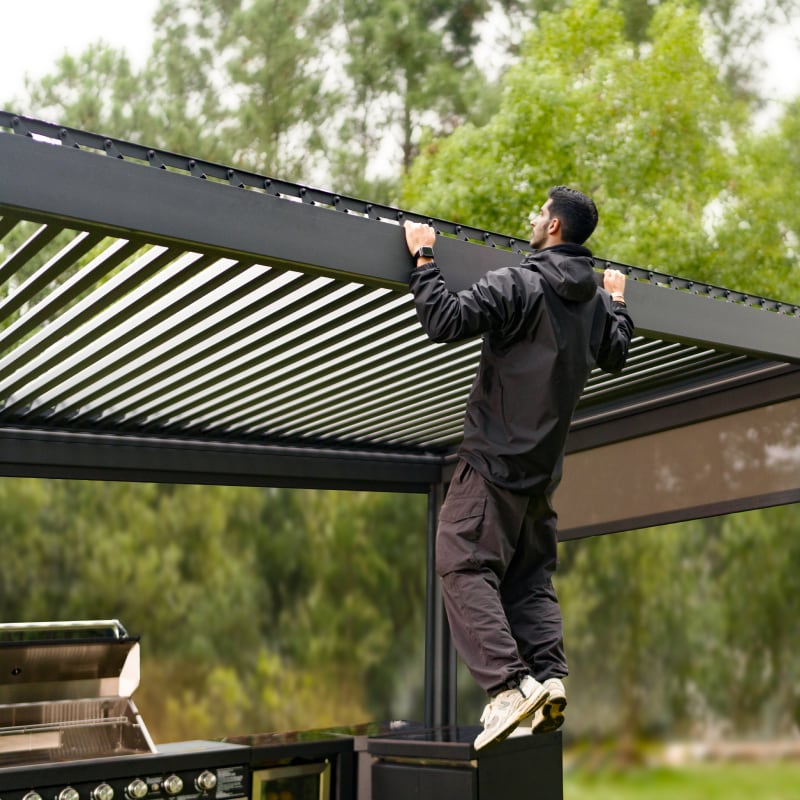
If you're looking for the best pergola roof to enhance comfort, flexibility, and aesthetics in your outdoor space, a pergola with a louvered roof might be the perfect solution. These systems combine the elegance of a traditional pergola with modern engineering—offering adjustable shade, weather protection, and even smart home integration.
What Is a Louvered Pergola Roof?
Unlike fixed roofs, a louvered pergola roof is made of horizontal slats—called louvers—that can be tilted open or closed. The louvers are typically made of powder-coated aluminum, a strong, rust-resistant material ideal for outdoor conditions. They can be manual or motorized, giving you full control over how much sunlight, breeze, or rain protection you want at any time.
How It Works?
- Manual systems let you adjust the louvers using a crank or lever, perfect for simple setups or rental-friendly options.
- Motorized versions operate via remote control, smartphone app, or voice commands through Alexa or Siri. Some models even include rain sensors that close the roof automatically when it starts to drizzle.
Key Benefits
1. Flexible Comfort Year-RoundThe ability to fine-tune sun, shade, and airflow makes a louvered roof incredibly versatile. You can let the light in on cool mornings, close it up for shade during hot afternoons, or tilt it slightly to allow air circulation.
2. Built for WeatherHigh-quality aluminum systems are built to handle rain, snow, and strong winds. Many models include built-in gutters and drainage channels, helping manage water runoff and keeping your patio dry.
3. Boosts Property AppealA modern pergola with louvered roof adds value to your home—both in everyday enjoyment and future resale. It transforms an ordinary patio into a functional, elegant outdoor room.
4. Sleek, Customizable DesignFrom minimalist black frames to wood-look finishes, louvered pergolas are available in a range of styles to match your space. Modular options also allow you to add features like privacy screens, lighting, or ceiling fans.
5. Smart Home IntegrationIf you're building a tech-friendly outdoor retreat, a motorized louvered system can sync with your existing smart devices for a seamless experience.
Potential Drawbacks
- Higher Upfront Cost: Motorized systems are more expensive than traditional pergolas, though many homeowners see this as a long-term investment.
- Installation Complexity: While some kits are DIY-friendly, complex models may require electrical setup or professional help.
- Not Ideal for Short-Term Use: If you're looking for a quick or temporary solution, a full louvered system might be more than you need.
Final Verdict: Are They Worth It?
For homeowners seeking the best pergola roof in terms of functionality, comfort, and modern appeal, a pergola with louvered roof is absolutely worth considering. It adapts to your lifestyle, withstands the elements, and elevates your outdoor space into a true living area—one that you’ll actually want to use year-round.
Conclusion
Choosing the right pergola roof can transform your outdoor area from a seasonal space into a year-round retreat. Whether you’re drawn to the classic look of wood slats, the modern appeal of polycarbonate, or the smart functionality of louvered systems, there’s a solution that fits your style, climate, and budget. For those looking for a durable, low-maintenance option with adjustable comfort, the Flexispot Aluminum Pergola with Louvered Roof is a standout choice. Its sleek design, rust-resistant build, and user-friendly assembly make it an excellent investment for elevating your backyard living experience.
FAQs About Pergola Roofs
1. Is it cheaper to buy a gazebo or build a roof over a pergola?
It depends on the materials and complexity. A simple metal gazebo may cost less upfront, but adding a custom roof to a pergola often looks more cohesive with your home and can offer better long-term value—especially if you already own the pergola.
2. What are some affordable or premade pergola roof options?
Budget-friendly pergola roof solutions include fabric canopies, PVC panels, and premade pergola roof kits with polycarbonate sheets. These are often easier to install and more cost-effective than custom roofing builds.
3. Can a 6x6 post support a roof with concrete tiles?
Possibly, but you’ll need to consider the total load (including snow, wind, and roofing weight). For heavier materials like concrete tiles, consult a structural engineer to ensure the pergola posts and footings can safely handle the load.
4. What’s the lifespan of a pergola with a metal or louvered roof?
High-quality aluminum louvered pergola roofs can last 15–30 years or more with minimal maintenance. Factors like powder coating, drainage systems, and weather exposure will influence longevity.