
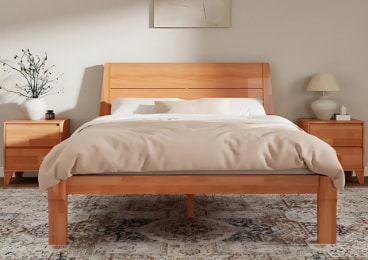
Recently, the term "wabi-sabi" has gained popularity in Japan, emerging as a new design style. Its key feature is bringing "imperfection" to minimalist designs, reflecting people's tiredness of hectic urban life and a longing for simplicity.
If you are a young renter who wants to give your bedroom a luxurious wabi-sabi vibe, do check out our tips below!
What is Wabi-Sabi?
Similar to Japanese and Nordic designs, wabi-sabi values simplicity, where it focuses on ultra-simplified elements by using natural curves and clean lines. However, unlike Nordic styles, it celebrates imperfections in textures to create organic beauty. If the intentionally imperfect style feels too bold, you can try incorporating certain elements of wabi-sabi into your room. For example, feel free to mix and match natural materials like wood, stone, clay, linen, wool, cotton, rattan, straw, bamboo, and more freely.

How to Create a Wabi-Sabi Bedroom?
You may not be able to carry out major changes to your bedroom due to restrictions by your landlord, but you can still apply some simple tricks to give it a wabi-sabi style makeover! All you need are three elements: furniture, vibe, and small decorative items.
1. Bed Frame Selection
The main pieces of bedroom furniture include the bed, nightstand, wardrobe, and more. Their material, color, design, and placement all contribute to the wabi-sabi aesthetic. Let's start with bed frame picks.
Material Matters: Prioritize raw wood textures
Oak/Walnut
Oak and walnut are bold and feature natural grain with knots and color variations that are perfect for the "raw aesthetic" of wabi-sabi. They are durable hardwoods that develop a warm patina over time, but the downside is that they cost more, so do consider your budget.
Rubberwood
Rubberwood has fine, natural grain and is much more affordable than oak and walnut, making it ideal for renters. Moreover, finger-jointed rubberwood shows seam marks, embodying the concept of embracing "imperfection". Best of all, rubberwood is strong, water-resistant, and durable, and these are the reasons why our bed frames are also constructed with Vietnamese rubberwood.
Rattan/Bamboo
The flexibility of rattan and bamboo allows for natural curves, with fine woven textures on the surface. They offer both breathability and a lighter feel, giving a Zen vibe to your bedroom. As such, they can be paired perfectly with linen bedding, floor cushions, and other soft furnishings to create a bedroom that blends Southeast Asian styles with wabi-sabi, making it ideal for summer.

Design & Craftsmanship
The wabi-sabi style features clean shapes and natural-looking designs, but never rough or sloppy. True wabi-sabi requires thoughtful, skilled craftsmanship to achieve its quiet simplicity.

Our Japanese joinery wooden bed frames use interlocking joints to connect all solid wood parts. This connection stays tight, holds up well, and is easy to put together and take apart, making it perfect for rental apartments!
2. Matching Nightstands
Nightstands are key pieces in bedroom sets. In terms of style, they can be simple, unique, or curvy, for all of them work fine. After all, what matters most is natural materials. It is even better to use unfinished raw wood like oak or walnut with its natural grain, knots, and markings intact!
To achieve that calm, earthy wabi-sabi feel, you can style your nightstand with the following items to create a peaceful, natural vibe effortlessly.
⋆ A few stacked books
⋆ A handmade clay vase with dried stems
⋆ Warm brass lighting nearby
.png)
A rubberwood nightstand echoes the bed frame by maintaining its natural grain while offering great value for money.
.jpg)
A built-in nightstand combined with a Japanese tatami bed frame embodies the simplicity of wabi-sabi while saving space in your bedroom.
3. Bedding Essentials
When choosing pillows, mattresses, and sheets, prioritize natural materials, soft tones, and minimalist lines.
Mattress Materials: Opt for latex or palm fiber mattresses with natural fibers to retain raw textures. Go for light beige or off-white hues.
Pillowcases and Duvet Covers: Choose fabrics with organic textures like coarse linen or ribbed patterns. Stick to Morandi colors like coral, salmon, champagne, and pearl gray for harmony, and layer with soft, handwoven blankets or bed runners.
.png)
4. Wall and Floor Selection
Wabi-sabi loves textured materials for walls and floors, like art paint, diatom mud, or concrete. It's all about that raw, misty roughness straight from the source. If you can't redo the walls in a rental bedroom, grab cheap textured wall stickers instead.
.jpg)
For floors, go with brown or gray wood tones as they offer a calm and low-key vibe. Most rental bedrooms already have light wood floors, so no big changes are needed here.
.jpg)
5. Rug Artistry: Add Warmth to Your Space
To match wabi-sabi's love for natural imperfection, choose rugs made from raw, handcrafted materials like wool, cotton, linen, or silk.
.png)
If your budget is under $200, faux cashmere or flat-woven washable rugs are a great choice. They feature subtle patterns that pair with wabi-sabi vibes. More importantly, you don't need a lot of time to maintain them, unlike shaggy rugs. Their smooth fibers resist dust and debris, so even if they get dirty, you can just toss them into the washer for a fresh look. Thanks to these rugs' machine-washable nature, they are super easy to clean, aligning perfectly with wabi-sabi's ethos of simplicity and comfort.
.png)
FlexiSpot's rugs feature light Persian-inspired patterns with a blue-and-white porcelain elegance. They subtly balance the simplicity of wabi-sabi bedroom furniture by adding interesting visual elements without overpowering the space.
.png)
If you'd like to go for raw wabi-sabi textures, try natural fiber rugs made of jute or sisal, for they showcase organic plant fiber textures with natural grain variations and differences in thickness. Simply put, these characteristics align with wabi-sabi's concept of rustic humility.
However, these materials have their disadvantages. Compared to wool or cashmere, they feel stiffer and offer less comfort.
.png)
6. Adding natural touches to your space
Natural materials are an essential element in wabi-sabi designs, for they give your living space a touch of nature's tranquility. Here are some tips:
.jpg)
Decorate your space with textured stoneware or rough-hewn pottery
.png)
Opt for minimalist botanicals like bamboo, rattan, or dried branches
.png)
Decorate or leave out negative spaces with hand-woven wall hangings
.png)
Use a coat rack to create a sense of imperfection and incompleteness
.png)
Install floating wall shelves made of faux solid wood
7. Embrace Negative Spaces
Negative space refers to the spaces in a room that are intentionally left empty and unoccupied. With such spaces, the room feels more spacious and less cluttered, which also helps our eyes to relax.
Adding some simple decorations to these blank spaces echoes the wabi-sabi philosophy of embracing imperfection and emptiness. You can also minimize the placement of furniture and unnecessary decor, and incorporate hidden storage spaces where possible. Furthermore, keep large areas of the wall unadorned to preserve the natural textures of both walls and floors. In short, you can make spaces dynamic, even with simple items.

Invite natural light through windows, allowing it to filter through sheer fabric curtains or venetian blinds. This casts dappled light and shadow on the walls, creating a dynamic "blank space" effect that feels like flowing emptiness.
Summary
When creating a bedroom with wabi-sabi elements, just remember two core concepts and four elements.
1. Core Concepts
⋆ Keep things simple
⋆ Embrace imperfections
2. The Four Elements
⋆ Natural elements: Wood, stone, clay, linen, wool, cotton, rattan, rice paper, straw, bamboo, etc.
⋆ Soft Colors: Stick to quiet, earthy tones
⋆ Gentle Light: Use soft, warm lighting
⋆ Negative Space: Leave some areas bare and uncluttered
That's all you need! Start with these basics, and your bedroom will feel calmer, more natural, and more peaceful. Most importantly, remember to carry the spirit of wabi-sabi in your heart by embracing imperfections, living simply, and reconnecting with what is genuine and pure. Let life unfold naturally.
As Beth Kempton wrote in her book, Wabi Sabi, a Japanese Wisdom for a Perfect Imperfect Life:
“Put simply, wabi-sabi permits you to be yourself. It encourages you to do your best but not make yourself ill in pursuit of an unattainable goal of perfection. It gently motions you to relax, slow down, and enjoy your life. And it shows you that beauty can be found in the most unlikely of places, making every day a doorway to delight.”
May we all face life’s daily hassles with this mindset.
FAQ
1. Q: How can I position my wardrobe to create a wabi-sabi style in my bedroom if I live in a rented room?
A: Since built-in wardrobes aren't feasible in rental rooms, here are some low-cost ways to position your wardrobe and incorporate a wabi-sabi style:
⋆ Use two to three old wooden planks as folding screens. You can then place your wardrobe and some baskets behind them.
⋆ Place your wardrobe in a corner and add some dried branches next to it.
⋆ Cover your wardrobe with textured wallpaper for a more natural look.
⋆ Place a hemp basket and a ceramic jar on top of your wardrobe.
2. Q: What is the difference between the wabi-sabi style and the Japandi style?
A: Both the wabi-sabi style and the Japandi style share similarities, like the use of natural materials, soft tones, and minimalist designs.
However, the key difference lies in the fact that wabi-sabi centers on imperfection and nature, embracing rounded edges, organic curves, textured finishes, and the beauty of worn furniture. Whereas, Japandi prioritizes clean, crisp minimalism with sleek, straightforward lines.
Let us know if you'd like a dedicated guide to creating Japandi spaces. We could introduce it in our next blog!
3. Q: How to create a wabi-sabi negative space in a tiny bedroom of a rented apartment?
A: Choose a Japanese tatami bed without a headboard to give your living space some breathing room.
⋆ Install bamboo shutters on windows. Adjust the slats to filter sunlight and create shifting shadows on walls.
⋆ Add a ceramic candle holder and wall-mounted lanterns to cast warm, ambient light for a relaxed wabi-sabi vibe.