
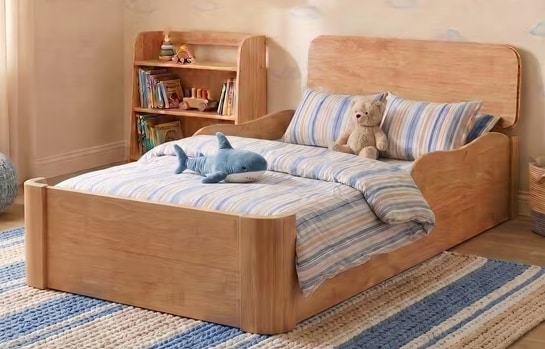
Choosing between a twin and a twin XL mattress sounds like a small decision.
For many families, however, those extra five inches can determine whether the same bed lasts another five years—or needs replacing much sooner.
Both mattress sizes share the same width of 38 inches. A twin is 75 inches long, while a twin XL is 80 inches long.
As children grow taller, mattress length often becomes a limiting factor before width does.
Quick Answer
A twin bed is generally better for younger children, short-term use, or smaller bedrooms.
A twin XL is typically a better choice for growing children or families who want the bed to last into the teenage years.
The only difference is length, but that extra five inches can extend usability by several years.
The short answer: Choose twin for short-term use. Choose twin XL for long-term growth.
Key takeaway: Choose a twin if you expect to replace the bed within a few years. Choose a twin XL if you want one bed that can continue serving your child through later childhood and beyond.
Twin vs Twin XL: Key Differences
| Feature | Twin | Twin XL |
| Size | 38" × 75" | 38" × 80" |
| Width | Same | Same |
| Length | Shorter | Longer |
| Typical Use | Younger children, smaller spaces | Growing children, long-term use |
| Expected Lifespan | Good for early childhood | Better for extended use |
| Room Impact | Minimal | Minimal |
| Bedding Availability | High | High |
The functional difference is only length, but that difference becomes more important as children grow taller.
A twin bed provides ample space for many younger children. A twin XL may remain comfortable for a longer period as children continue to grow.
Should You Buy a Twin XL Instead of a Twin?
If you expect your child to use the same bed for many years, starting with a twin XL may reduce the likelihood of needing a replacement later.
If the bed is intended for only a few years or bedroom space is especially limited, a standard twin remains a practical option.
The better choice depends less on today's comfort than on how long you expect the bed to remain in use.
Why Mattress Length Matters for Kids
In children's beds, width rarely becomes a limiting factor. Height is what determines how long a bed remains comfortable.
As children grow, they naturally stretch more during sleep, change positions frequently, and require more usable legroom.
When a child is 4, a twin bed feels like a castle. But by age 10, once larger pillows, stuffed animals, and thicker bedding are added, the usable sleeping space becomes noticeably smaller.
As children approach later elementary school or enter adolescence, some may begin to notice that a standard twin mattress feels shorter than it once did. At that stage, additional length becomes more noticeable in daily comfort.
Mattress size determines how long a bed remains usable, while everything else is adjustable or replaceable.
For many parents, replacing a child's bed is about more than buying another mattress. It often means moving furniture, updating bedding, rearranging the bedroom, and finding a place for the old frame. Choosing a mattress size that remains practical for longer may help reduce those future changes.
Does a Twin XL Require More Space?
No significant difference.
A twin XL only adds five inches in length while keeping the same width. In most bedrooms, this difference does not meaningfully affect layout or circulation space.
If a twin bed fits, a twin XL will usually fit as well.
The additional length is typically less than the depth of most nightstands or dressers.
Which Bed Lasts Longer?
The key difference is not comfort on day one, but lifespan.
- Twin beds typically support early childhood and part of elementary school.
- Twin XL beds often extend usability into adolescence.
A twin XL may help delay or even avoid an earlier bed replacement for some families.
Choosing Between Twin and Twin XL: Which One Makes More Sense?
When a Standard Twin Bed Makes More Sense
A twin bed is still a strong option when:
- Bedroom space is limited
- The bed is for short-term use
- The child is still very young
- A future room redesign is expected
- Budget is a priority
Because twin bedding is widely available, it also remains the simplest option for replacement and styling.
A twin bed works well for families who prefer to reassess room needs every few years.
When a Twin XL Makes More Sense
A twin XL is usually better when:
- You want the bed to last several years longer
- Your child is growing quickly or already tall for their age
- You want to reduce future furniture replacements
- The bed is expected to carry into teenage years
It is commonly used in both kids' rooms and dorm-style setups for this reason.
A twin XL is often the better investment for families planning to stay in the same home long-term.
Why More Kids' Beds Use Twin XL
Modern kids' furniture design is increasingly focused on multi-stage usability.
Instead of designing beds for a single age range, many systems now support growth transitions:
- Low-profile floor bed configuration for younger children
- Adjustable configurations for independence
- Standard bed height for older children
When paired with a twin XL mattress, this approach allows one bed to remain functional across multiple growth stages.
For families planning several years ahead, twin XL mattresses are often chosen because they can continue meeting a child's needs for longer.
--altImgStart--{"link":"https://s3.springbeetle.com/prod-us2-bucket/kids-bed-size-twin-vs-twin-xl-comparison_20260706_w6ByYzJQ.png","alt":"Diagram illustrating the 5-inch length difference between a standard twin bed for kids and a twin XL mattress."}--altImgEnd--
A Convertible Approach to Long-Term Use
Many modern kids' beds are designed to remain useful beyond the toddler years instead of serving only one stage of childhood.
Some models pair a standard twin XL mattress with removable safety rails, allowing the same frame to transition from a floor bed for younger children to a standard bed as they grow.
For families thinking several years ahead, this type of adaptable design may help reduce future furniture replacements while making better use of the same piece of furniture.
--altImgStart--{"link":"https://s3.springbeetle.com/prod-us2-bucket/convertible-montessori-floor-bed-twin-xl_20260706_tCw6pxQa.png","alt":"Convertible Montessori Floor Bed that transforms into a Twin XL bed for growing kids."}--altImgEnd--
What Matters Besides Mattress Size
Bed performance is not determined by size alone.
Structural design often has a greater impact on durability and long-term usability.
| Feature | Why It Matters |
| Solid wood frame | Improves durability over time |
| Slat support system | Enhances mattress stability and airflow |
| Removable safety rails | Supports different growth stages |
| Rounded edges | Improves safety for younger children |
| Child-safe materials and low-VOC finishes | Help support healthier indoor air quality and reduce exposure to potentially harmful substances |
| Standard mattress compatibility | Simplifies replacement and upgrades |
These features influence how long the bed remains functional in everyday use.
A well-built frame can outlast multiple mattress replacements if the size remains compatible.
Simple Decision Rule
Most families can decide using three factors:
- How fast the child is growing
- How long the bed is expected to be used
- How flexible the room layout is
Choose Twin if:
Short-term use and space efficiency matter most.
Choose Twin XL if:
Long-term use and growth coverage are more important.
The best decision is the one that aligns with your family's long-term plans for the room.
Final Answer
The difference between twin and twin XL is only five inches.
However, that small difference can significantly affect how long a bed remains usable as a child grows.
A twin is practical, space-efficient, and widely available.
A twin XL offers better long-term flexibility and reduces the need for early replacement.
For many families, choosing the right mattress size at the beginning may be one of the simplest ways to extend the useful life of a child's bed.
Frequently Asked Questions
1. What is the difference between twin and twin XL?
The only difference is length. Twin is 75 inches long, twin XL is 80 inches long. The width is identical at 38 inches.
2. Can twin sheets fit a twin XL mattress?
Flat sheets usually fit both sizes, but fitted sheets designed for a standard twin are generally too short for a twin XL mattress. Using twin XL fitted sheets helps ensure a proper fit.
3. What age is twin XL better for?
Twin XL becomes more useful as children approach later elementary school and teenage years, depending on height and growth rate.
4. Which is better for small rooms?
Both are similar in footprint. Twin may feel slightly more compact in very small spaces, but the difference is minimal.
5. Do kids really need a twin XL bed?
Not necessarily. Twin XL is a long-term choice, not a requirement. For families expecting to replace the bed within a few years, a standard twin is often sufficient.
6. What size bed is best for a 10-year-old?
It depends on height and growth rate. A twin may still fit comfortably at 10, but many families choose twin XL to extend usability through adolescence.
7. Twin XL vs full bed for kids?
A full bed is wider, which can take up more floor space. A twin XL offers the same length as a full while maintaining a more compact width, making it better suited for smaller rooms.
8. Twin vs. Twin XL for kids: Which should I choose?
If you expect your child to use the same bed for only a few years, a standard twin is usually sufficient. If you want the bed to remain comfortable through later childhood or the teenage years, a twin XL generally provides better long-term flexibility. The best choice depends on your available space and how long you expect the bed to remain in use.
9. Can adults sleep on a twin XL bed?
Yes. A twin XL mattress provides the same length as a standard queen or king mattress, making it suitable for many adults. It is commonly used in college dormitories and guest rooms.