
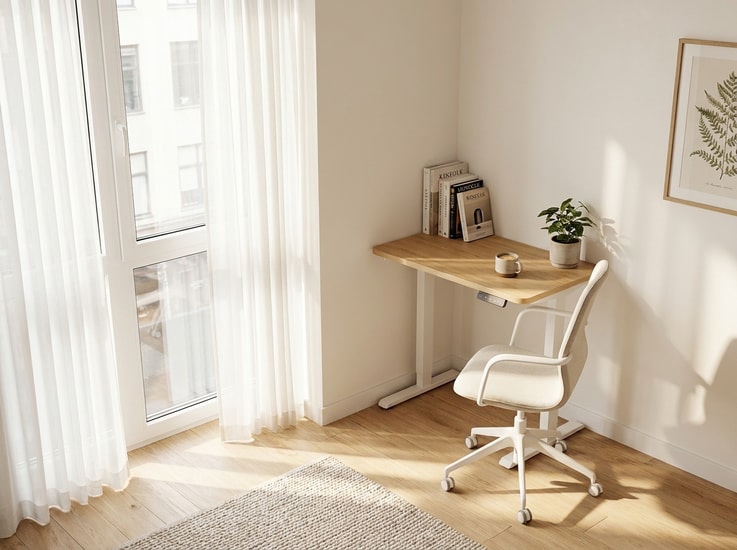
A window can change how a corner of a room feels. Natural light makes the area more noticeable, while an outdoor view creates a connection to the space beyond the walls. With the right arrangement, even an unused corner beside a window can become a comfortable place to read, work, or take a break.
In this guide, a window nook means a small area arranged around or beside a window for a specific purpose. It does not require a built-in bench or a bay window. A chair, compact desk, or small bench may be all you need to get started.
Start with the activity you want the nook to support, then consider the available space, light, privacy, and furniture that will fit comfortably.
What Makes a Window Nook Feel Inviting?
Natural Light
Natural light can make a window nook feel brighter and more open than a corner farther inside the room. It can also make the space more appealing for daytime activities, from reading to casual work.
The quality of that light varies throughout the day. A bright window is not automatically the best place for every activity, especially if direct sunlight creates glare or heat. How to check those conditions is covered in the next section.
A View Beyond the Room
A window gives the eye somewhere to go beyond the furniture and walls. Even a partial view of trees, a garden, or the surrounding neighborhood can make a small corner feel less enclosed.
You do not need to fill the area with furniture to make use of this feature. Keeping the windowsill and the space directly in front of the window relatively clear can help preserve the view and prevent the nook from feeling crowded.
A Clear Purpose
A window nook works best when it supports something you actually do. A reading corner needs comfortable seating and somewhere to keep a book. A workspace needs a suitable desk, a chair, and enough room for everyday tasks. A bedroom nook may be more useful as a quiet place to sit and unwind.
Trying to combine every function in one small area can make the arrangement less practical. Start with one main activity, then add secondary uses only if the space can accommodate them comfortably.
Why Some Window Nooks Go Unused
Before choosing furniture, check whether the window area is comfortable at the time you plan to use it, private enough for that activity, and easy to move through. The three sections below explain what to look for.
Sunlight, Heat, and Glare
Direct sunlight can make a window nook too bright or warm at certain times of day. On a desk, glare may make a computer screen harder to see. On a reading chair, strong light can become uncomfortable after a while.
Observe the window at different times before deciding where furniture should go. Note when direct sunlight reaches the area, whether it creates screen glare, and whether the space becomes too warm. These observations will help you decide where to place the furniture and whether you need adjustable window coverings.
If the window becomes noticeably warm, check whether the area remains comfortable during the hours you plan to use it. The best arrangement depends on the window's orientation, the climate, and the room's existing temperature control.
Noise and Privacy
A window facing a busy street may bring in traffic noise, while a ground-floor window may leave you feeling exposed to people outside. These conditions do not automatically rule out a window nook, but they can influence how you use it.
Curtains or blinds can help with privacy, while outside noise may require a different approach. If traffic or other sounds regularly interrupt focused work or reading, consider whether another part of the room would be more suitable for that activity.
Access and Everyday Movement
A window nook should feel like part of the room, not an obstacle in the way. Before settling on a layout, check the route between the doorway, bed, desk, and other frequently used areas.
Make sure chairs can be pulled out without blocking a main walkway. Avoid placing furniture where it interferes with opening windows or operating window coverings. If the area is in a bedroom, leave enough room to get in and out of bed comfortably.
Window Nook Ideas for Different Window Spaces
The shape of the window and the usable space around it affect which furniture arrangements are practical. This section covers three common situations: bay windows, standard windows, and small bedrooms. Each one raises a different layout question.
Bay Windows: Make Use of the Extra Depth
A bay window often creates a natural nook because the window projects outward from the main wall. That extra depth is the main advantage, but it also changes how furniture needs to be measured.
Measure the usable width and depth of the area where the furniture will sit, then account for any angled sides, window trim, and space needed to move around it. For a built-in bench, also consider the seat depth and the room needed for your legs and feet.
A built-in bench can make good use of the available footprint, particularly when the space beneath it can accommodate storage. If a permanent bench is not practical, a compact chair or a low-profile seat may work instead. Also make sure the bench does not prevent you from opening the windows or reaching any nearby controls.
--altImgStart--{"link":"https://s3.springbeetle.com/prod-us2-bucket/compact-chair-for-bay-window-area_20261026_bIPo3ZYx.png","alt":"compact-chair-for-bay-window-area.png"}--altImgEnd--
Standard Windows: Choose Furniture That Fits
A standard window set into a flat wall may not provide enough depth for built-in seating, but it can still anchor a useful corner. Because there is no recess to work with, freestanding furniture is usually the more practical choice.
Check the sill height and window opening mechanism before choosing furniture. If you plan to place a desk beneath the window, make sure the desktop fits below the sill and leaves enough room for the window to open. For a chair or bench, consider how much of the glass it will cover and whether that affects the light and view.
If the space in front of the window is shallow, a narrow bench, a small stool, or no furniture at all may work better than a full chair. The goal is to make the window part of the arrangement without forcing furniture into an awkward fit.
Small Bedrooms: Protect the Floor Space
In a small bedroom, the window area often competes with the bed, storage, and walking paths. Before adding furniture near the window, check how it affects the space around the bed and whether the wardrobe can still open fully.
A desk beneath the window may be practical if it leaves enough room for the bed and chair. If the desk makes the room feel cramped, a small seat or an open stretch of floor may be more useful. Keep visual clutter to a minimum so the nook does not compete with the rest of the room.
--altImgStart--{"link":"https://s3.springbeetle.com/prod-us2-bucket/small-bedroom-window-nook_20261026_wnQUX8FQ.png","alt":"Small bedroom window nook with space-saving furniture layout."}--altImgEnd--
A Window Nook as a Workspace
A window nook can also function as a home office. The challenge is to make use of the natural light without allowing the window to interfere with screen visibility, posture, or everyday work.
Choose the Right Desk Orientation
Placing a desk directly in front of a window can create an appealing workspace, but it is not always the most comfortable arrangement. Bright daylight may reflect on a monitor, and direct sun can make the work surface too warm.
Placing the desk at a right angle to the window is a useful starting point because daylight comes from the side rather than directly in front of or behind the monitor. However, screen reflections depend on the window's position, the monitor angle, and other light sources in the room. Test your preferred arrangement during your usual working hours, then adjust the desk, monitor, or blinds if glare becomes distracting.
Make Sure the Desk Fits the Space
A desk should provide enough room for your monitor, keyboard, and other work essentials without taking over the entire nook. Measure the available width and depth, and account for the space needed to pull out the chair.
If you plan to alternate between sitting and standing, a height-adjustable desk may work in a window nook. Compact models designed for small spaces can be a good fit when floor area is limited, since they typically combine a narrower frame with the same height range as full-size desks. Check the desk's full footprint and height range before placing it near a window. The desktop and frame should be able to move without hitting the sill, curtains, or nearby furniture.
--altImgStart--{"link":"https://s3.springbeetle.com/prod-us2-bucket/small-bedroom-window-nook_20261026_mxzwy3eY.png","alt":"Compact height-adjustable standing desk set up in a bright window nook for work."}--altImgEnd--
Choose a Chair That Supports Your Work
The chair should fit both your body and the available space. In a window nook, the more specific concern is how the chair interacts with the window and the room: whether the chair back blocks the glass, whether the seat can be pulled out without hitting the sill or wall, and whether there is enough room behind the chair to stand up comfortably.
For longer work sessions, aim for a setup where your elbows rest near a 90-degree angle at the desk and the top of the monitor sits roughly at or just below eye level. Seat depth, back support, and armrest position also matter. A chair that is too large may make a small window nook difficult to move around, even if it is comfortable on its own.
A Window Nook as a Reading Spot
A reading nook does not require a built-in window seat. The essentials are comfortable seating, suitable light, and a place to keep the items you use.
Start With Comfortable Seating
Choose seating that suits the amount of time you expect to spend there. An upholstered armchair may be comfortable for longer reading sessions, while a compact bench or cushioned seat can work in a narrow area.
In a window nook, check that the seat depth and height work with the sill. A chair that is too tall may block the window, and a bench that is too deep may leave no room for legs in a shallow bay.
Add Light for Different Times of Day
Daylight may be enough for reading during the afternoon, but the nook will need another light source after dark. A floor lamp can work beside a chair if there is enough room. A table lamp may be more practical when the seating includes a side table.
Position the light so it illuminates the page without shining directly into your eyes. If the window receives strong daylight, adjustable curtains or blinds can also help you control brightness.
Keep Accessories Useful
A side table, a small shelf, or a nearby bookcase can keep reading materials within reach. In a small nook, keep these pieces narrow enough that they do not block the window or reduce the space around the chair.
A cushion or throw can make the space feel more comfortable, but too many accessories can make a small nook harder to use. Start with the essentials and add more only when you know what the space needs.
Bring a Window Nook Into the Bedroom
A bedroom window nook can provide a separate place to sit, read, or get ready for the day. The main question is how it fits around the bed, storage, and walking paths.
--altImgStart--{"link":"https://s3.springbeetle.com/prod-us2-bucket/bedroom-window-reading-corner_20261026_RdqwgvKM.png","alt":"Cozie bedroom corner with a comfortable accent chair and soft textiles by the window."}--altImgEnd--
Work With the Existing Layout
A chair beside the window may be enough to create a separate seating area. In a larger bedroom, a bench or small table can give the corner a clearer purpose.
Before adding furniture, check that it does not interfere with the bed, wardrobe doors, or the main walking paths. If the room already feels crowded, leaving the window area open may be more useful than filling it with another piece of furniture.
Choose Materials That Suit the Room
Wood, woven fabrics, and linen can help a nook feel connected to the bedroom. Repeating one or two finishes, such as wood tones or fabric colors, can create a sense of continuity without making the area feel overly coordinated.
A Practical Checklist for Planning Your Window Nook
Before buying furniture or rearranging the room, work through these steps:
- Decide on one main purpose for the nook before adding secondary uses.
- Measure the usable width and depth of the area, note the sill height, and check how far the window opens into the room.
- Observe direct sunlight and screen glare during the hours you plan to use the nook.
- Use painter's tape to mark the furniture footprint on the floor. Include the space needed to pull out a chair and walk past it without squeezing through.
- If using a height-adjustable desk, confirm the desktop and frame clear the sill, curtains, and nearby furniture through the full height range.
- After placing the furniture, confirm that the window opens fully and the curtains or blinds can be operated without obstruction.
- Test the arrangement by sitting down, pulling out the chair, opening the window, and moving through the room as you normally would.
These steps help you choose furniture that fits the room and your routine instead of designing the corner around a single image or style.
Make Your Window Nook Work for Everyday Life
A window nook does not have to be large or custom-built to be useful. A comfortable seat, a compact desk, or simply a clear area beside the window can make better use of the space you already have.
Start by deciding how you want to use the nook, then check the light, available floor space, and window access before choosing furniture. The best arrangement is one that supports your routine without making the rest of the room harder to use.
Frequently Asked Questions
1. What is a window nook?
A window nook is a small area arranged around or beside a window for a specific purpose, such as reading, working, or relaxing. It may include a built-in bench, a freestanding chair, a compact desk, or simply a comfortable place to sit.
2. Does a window nook need a built-in window seat?
No. A built-in seat is one option, but it is not essential. A freestanding chair, small bench, or desk can also make use of the window area. The best choice depends on the room's dimensions, the window sill, and the activity you want to support.
3. How do you arrange furniture around a window?
Begin by measuring the window area and identifying the main activity. Place furniture where it makes use of the light and view without blocking access to the window or the room's main walking paths. For computer work, test the desk orientation to reduce screen glare.
4. Can you put a desk in front of a window?
Yes, provided the desk fits the available space and does not interfere with the window. Direct sunlight can create screen glare or heat the work surface. Try different desk orientations and adjust the blinds or monitor angle to find a setup that works during your usual working hours.
5. Can you create a window nook in a small bedroom?
Yes. A compact chair, narrow desk, or small bench may work if there is enough clearance for the bed, storage, and normal movement. Choose one main purpose for the nook and avoid adding furniture that makes the bedroom harder to navigate.
6. What should you include in a window reading nook?
A comfortable chair or appropriately sized bench is a good starting point. Add a small side table or nearby shelf for books, and include a lamp for evening use. Seat depth, back support, and available floor space matter more than the number of decorative accessories.
About the Author
The FlexiSpot Content Team creates practical guides on home office setups, furniture selection, and everyday living spaces. Our goal is to help readers understand their options and make informed decisions based on their needs, available space, and daily routines.